Blog · Career Advice
How to Build a Career as a Podcast Production VA
What podcast production VAs actually do, the licensing risk most guides skip, and how to get placed with a real client. No fees, ever.

Prateek Sahni
Published: 7 September 2026 · 9 min read
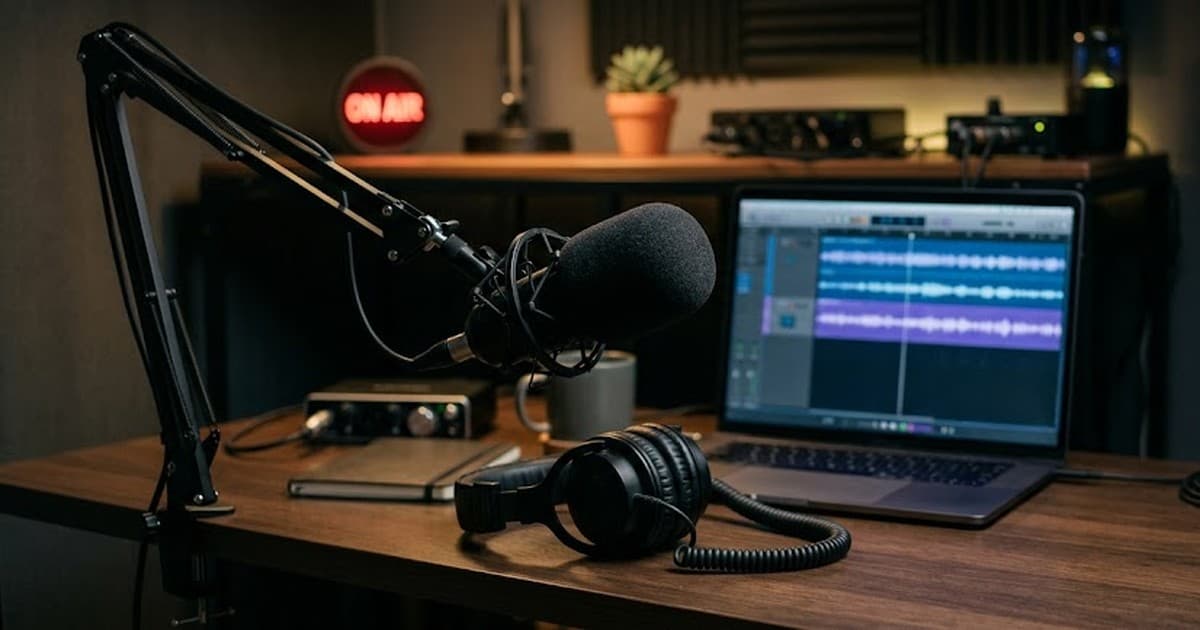
Podcasting has grown into a genuine, ongoing production commitment for businesses, coaches, and creators across Australia, the UK, the USA, Canada and the UAE and most hosts don't have the hours it actually takes to edit, publish and promote a show every week on top of everything else. That's created real, steady demand for podcast production virtual assistants, with candidates in India, the Philippines and Bangladesh filling the role remotely.
This is a smaller, more specialized niche than some other VA specialties, so it's worth being upfront: this guide is here to make sure candidates know the option exists and understand it properly, not to promise a flood of listings. What it covers is what the role actually does, a real legal risk almost nobody explains to candidates, the tools and habits that define good performance and how to get placed directly with a podcast host instead of pitching yourself account by account.
What a Podcast Production Virtual Assistant Actually Does
A podcast production VA handles the ongoing behind-the-scenes work that keeps a show running on schedule, for one host or production team. Job postings for this role vary in what they call it - some say "podcast editor," others "podcast production VA" or "podcast virtual assistant", but the underlying work is usually the same. Typical responsibilities include:
Editing raw audio (and often video) - cutting dead air, fixing levels, removing filler words and mistakes.
Writing show notes and episode descriptions.
Coordinating guest scheduling, confirmations and pre-interview logistics.
Publishing episodes across hosting platforms and managing the show's RSS feed.
Creating short promotional clips or audiograms for social media.
Tracking a consistent release calendar so episodes go out on schedule.
A single hour of recorded audio typically takes several hours of production work to turn into a finished, published episode - editing, notes, clips and distribution all add up. That's the real value a podcast VA provides: the host focuses on the actual conversation and everything after "stop recording" is handled reliably, every week, without the host having to think about it.
The scope shifts depending on the show's format. An interview-style show needs heavier guest coordination - scheduling, pre-interview briefs, confirmations and the awkward follow-up when someone goes quiet before a recording date. A solo or narrative-style show shifts the weight toward scripting support, research and tighter editing since there's no second voice to carry a rough patch. A business or brand podcast often needs the promotional side built out more heavily - clips, quote graphics and cross-posting, since the show exists to support a wider marketing goal, not just build an independent audience.
The Legal Risk That Can Wipe Out an Entire Show
This is the part of the job almost nothing written about this role explains and it matters more than it might seem.
Using copyrighted music in a podcast without a proper license is a real, active enforcement risk, not a theoretical one. As of February 2025, major music publishers began sending takedown notices covering more than 2,500 detected instances of unlicensed music found in podcasts on a major streaming platform, an ongoing enforcement action, not an isolated incident. The consequences aren't limited to a warning: platforms can and do remove individual episodes and in some documented cases, an entire show with hundreds of episodes and a real audience has been pulled entirely after an automated copyright claim, sometimes with little warning and a difficult recovery process afterward.
A podcast VA who understands this protects the show they work on. The safe habits are straightforward: use properly licensed royalty-free music libraries rather than anything pulled from a random source, get a guest's written consent before publishing an interview and never assume a short clip of copyrighted music is automatically fine just because it's brief. None of this requires legal training, it requires treating music and audio sourcing as seriously as a graphic designer should treat stock photo licensing and being able to explain that habit clearly is a real signal of professionalism in an interview.
It's worth being specific about what "properly licensed" actually means in practice, since podcasters often assume incorrectly that a license covering radio or streaming automatically covers podcasts too - it usually doesn't, because podcasts are on-demand and permanently archived in a way broadcast music licenses were never designed to cover. Purpose-built royalty-free libraries exist specifically to solve this, and defaulting to one of those rather than a favorite song from a personal playlist is the single habit that avoids almost all of this risk.
Why RSS Feed Management Actually Matters
This is a small technical detail most candidates never think about until it goes wrong and it's worth understanding upfront.
A podcast doesn't live natively on Spotify or Apple Podcasts - it lives on a hosting platform, which publishes an RSS feed that every directory pulls episodes from automatically. That means the RSS feed is the actual backbone of a show's entire distribution. A mistake here isn't cosmetic: a broken feed, an incorrectly formatted episode entry or a hosting migration done carelessly can cause a show to stop updating across every platform at once, sometimes without an obvious error message pointing to why. A podcast VA who understands that publishing isn't just "upload the file", it's maintaining a feed that has to stay valid every single time, is protecting something a host might not realize is fragile until it breaks.
This isn't difficult to learn, but it's rarely explained clearly, which is exactly why understanding it is a real point of difference for a candidate applying to this kind of role - most competitor content about this job talks about editing skill and forgets that a technically perfect edit is worthless if the feed carrying it breaks.
The Tools You'll Actually Use
Most podcast production work runs on a fairly consistent set of tools:
Descript - increasingly the standard for editing, since it lets you edit audio by editing a text transcript, which speeds up cutting filler words and mistakes significantly.
Audacity - a free, capable alternative for more traditional waveform-based audio editing.
CapCut - commonly used for turning episode highlights into short video clips for social promotion.
Buzzsprout, Captivate and similar hosting platforms - where episodes actually get published and distributed to Spotify, Apple Podcasts and other directories through the show's RSS feed.
You don't need expert-level fluency in all of these before applying. What matters is genuine comfort with at least one editing tool, an understanding of how RSS-based publishing works and the reliability to hit a consistent release schedule. Clients tend to care far less about which specific software a candidate already knows than whether they can learn whatever tool the show already runs on without needing extensive hand-holding.
The Skills That Actually Get You Kept On
A few habits separate a podcast VA a host keeps long-term from one who doesn't:
Turnaround time that doesn't slip.
Podcasts run on a release calendar and a late episode is immediately visible to an audience - reliability here matters more than in almost any other VA specialty.Consistent formatting across episodes.
Show notes, episode titles and clip styles that stay consistent episode to episode make a show look more professional and inconsistency is one of the fastest ways a show starts to feel amateurish.A good ear for what to cut.
Removing dead air and filler without cutting the host's natural rhythm or the guest's actual point takes real judgment, not just mechanical trimming.Proactive guest coordination.
Confirming guests, sending calendar invites and following up before a no-show becomes a scheduling crisis saves a host real stress on a recurring basis.Comfort giving the host honest feedback when something isn't working.
A show that's drifting in quality benefits more from a VA who flags it constructively than one who edits around a problem silently every week without saying anything.
Building Proof Without Paid Client History
Podcast editing is one of the easier VA specialties to demonstrate directly, which is worth using to an advantage. A short before-and-after clip - a rough, unedited few minutes of audio next to the same clip cleaned up, leveled and tightened - shows real skill far more convincingly than describing it in a resume. Editing a friend's or family member's casual recorded conversation, with their permission, into a polished sample episode works just as well as paid client work for demonstrating ability, as long as it's presented honestly as practice work rather than implied to be a real client engagement.
A short written sample of show notes for a real, publicly available podcast episode (again, clearly labeled as unsolicited practice) rounds out a strong application, it shows both audio judgment and the writing clarity the role also depends on.
How Innovex AI Supports You
Innovex AI places candidates in podcast production support roles directly with vetted international clients - no pitching, no bidding against other candidates on a job board and no fees at any stage of the process. Vetting isn't a hurdle here; it's what lets a host hand over their show's production and public-facing content with real confidence from day one.
If podcast production is one of several directions you're weighing, the niches hub walks through how it compares to other VA specialties. If you're building your first portfolio of proof points, start with the portfolio guide, which covers how to show real production work even without a paid client history. And since this role overlaps heavily with content promotion, it's worth reviewing the social media VA guide too, since many roles blend both.
Candidates from India, the Philippines, and Bangladesh are placed with clients across Australia, the UK, the USA, Canada, New Zealand, France, UAE, Netherlands and Singapore.
Frequently Asked Questions
Do I need audio engineering experience to become a podcast production VA?
No formal training is required, but genuine comfort with an editing tool like Descript or Audacity matters. Most of the skill develops through practice, a good ear for pacing and cuts is something you build, not something you need to arrive with already.
Is using background music in a podcast actually risky?
Yes, if it isn't properly licensed. Platforms actively enforce music copyright and consequences range from a single episode being removed to an entire show being taken down. Using royalty-free libraries specifically licensed for podcasting avoids this entirely.
What software should I learn first?
Descript is a strong starting point since its transcript-based editing is faster to learn than traditional waveform editing and it's widely used across the industry.
Is this a high-volume job category compared to other VA specialties?
Not especially, it's a smaller, more specialized niche than something like customer service or e-commerce support. It's a genuine category Innovex places candidates into, worth knowing about if it matches your interests and background, rather than something to expect a flood of listings for. Candidates with a genuine interest in audio, editing or content production tend to find it a more natural fit than those approaching it purely as a numbers game.